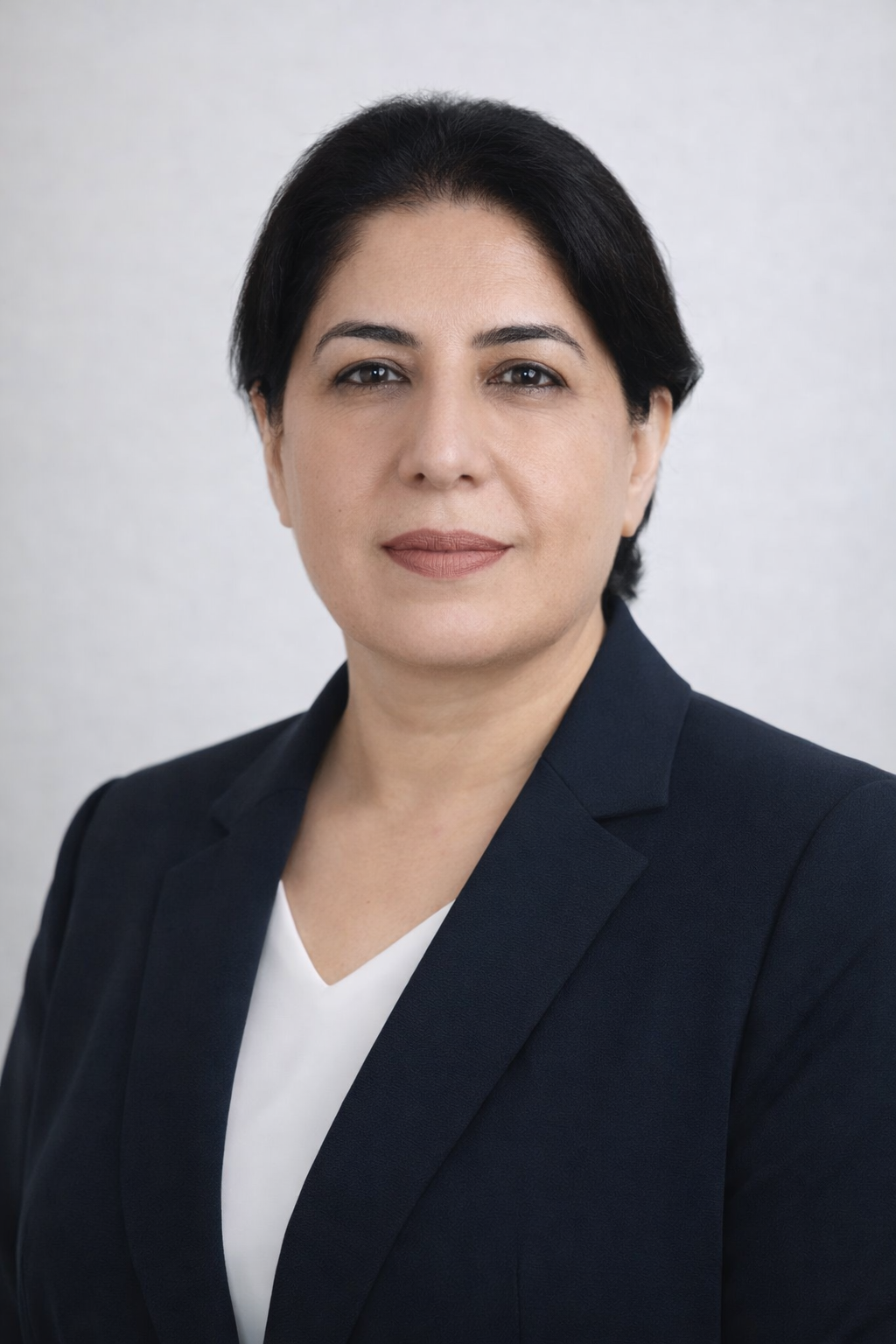
Siddiqua Aamir is a faculty member in the College of Sciences & Human Studies, Department of Humanities & Social Sciences at Prince Mohammad Bin Fahd University (PMU). She earned her Ph.D. in Psychology from the University of Peshawar in 2005. Since joining PMU in 2012, she has taught Introduction to Psychology and core curriculum courses that contribute to the university’s academic foundation.
Dr. Aamir specializes in clinical psychology, with expertise in mental health, emotional well-being, and student adjustment. Her research focuses on psychological factors influencing learning, resilience, and adaptation among university students. She is particularly interested in integrating clinical psychology insights into educational contexts to enhance student success, engagement, and overall well-being.
Her professional experience spans academic teaching, research supervision, and curriculum development, contributing to strengthening psychology education within a multidisciplinary university environment. Through her work, she aims to promote evidence-based practices that support students’ academic performance and psychological health.
In teaching, Dr. Aamir emphasizes critical thinking, self-reflection, and the practical application of psychological principles. She encourages active learning and meaningful discussion to help students connect theory with real-life experiences. Her approach fosters analytical skills, emotional awareness, and personal growth.
Currently, Dr. Aamir is engaged in research examining mental health trends and learning experiences in higher education, with a growing interest in exploring the intersection of psychological well-being and technology-enhanced learning. She remains committed to advancing student-centered research and promoting holistic development in academic settings.
-
Ph.D. in Psychology, December 2005
University of Peshawar, Pakistan
-
M.A. in Psychology, 1991
University of Peshawar, Pakistan
-
B.A. in Psychology and Political Science, 1988
University of Peshawar, Pakistan
-
Pilotti, M., Alaoui, K. E., & Aamir, S. (2026). Promoting a sustainable education perspective through critical thinking exercises without AI support. The International Journal of Interdisciplinary Educational Studies. https://doi.org/10.18848/2327-011x/cgp/a245
-
Pilotti, M., Bo Julaia, M., & Aamir, S. (2026). Are reports of memory failures in an understudied population of first-year female students related to self-confidence or anxiety? Journal of International Students, 16(4), 17–32. https://doi.org/10.32674/1by4fx30
-
Aamir, S., & Strachan, L. (2024). Unleashing academic potential in Saudi Arabia: The impact of soft skills on female undergraduate students’ learning outcomes. International Journal of Management and Applied Science, 10(6), 124–125. http://iraj.in
-
Winkel, C., McNally, B., & Aamir, S. (2023). Narratives of crisis: Female Saudi students and the COVID-19 pandemic. Illness, Crisis & Loss. https://doi.org/10.1177/10541373211029079
-
Winkel, C., Strachan, L., & Aamir, S. (2022). Saudi female student experiences with emergency remote teaching during the COVID-19 pandemic. International Journal of Emerging Multidisciplinaries: Social Science, 1(1), 1–13. https://doi.org/10.54938/ijemdss.2022.01.1.117
-
Aamir, S., & Winkel, C. (2021). The impact of COVID-19 on Saudi Arabian female students: An application of the CES-D depression scale. Journal of Educational and Social Research, 11(1), 23. https://doi.org/10.36941/jesr-2021-0003
-
Winkel, C., Strachan, L., & Aamir, S. (2021). From east to west and back again: The effects of reverse culture shock on female Saudi Arabian university students studying abroad. Journal for Multicultural Education. https://doi.org/10.1108/jme-06-2021-0069
-
Pilotti, M. A. E., Aamir, S., Al Ghazo, R., & Al Kuhayli, H. A. (2019). Explicit conditional reasoning performance: An examination of educational past, processing load, and self-efficacy. International Journal of Teaching and Learning in Higher Education.
-
Dinu, D., & Aamir, S. (2018). Motivational factors leading to academic success: An analysis conducted on the female campus at PMU University in Al-Khobar, Saudi Arabia. Humanities and Social Sciences Review, 8(1), 45–52.
-
El Alaoui, K., Mulhem, H., Pilotti, M. A. E., Amir, S., & Tallouzi, E. (2017). Arabic-English bilingual speakers’ reactions to the statements of the new general self-efficacy scale. The International Journal of Learner Diversity and Identities, 24(2), 21–38.
-
El Alaoui, K., Pilotti, M. A. E., Tallouzi, E. A., Aamir, S., Rzhavskaya, E., & Mulhem, H. (2017). Self-efficacy in the presence of “small talks” in college: The harms and the needs of the tongue. Journal of Global Research in Education and Social Science, 10(3), 117–127.
-
Amir, S., Tallouzi, E., Pilotti, M. A. E., & El Alaoui, K. (2017). The new general self-efficacy scale: A matter of language. In Proceedings of the 1st International Conference on Advanced Research (ICAR-2017).
-
Aamir, S., Latif, N., & Basit, A. (2016). Role of counselling to facilitate compliance to DOTS for the treatment of tuberculosis. Archives of Pulmonology and Respiratory Care, 2(1), 028–031.
-
Siddiqua Aamir, S., Zainal, N. Z., Loh, E. C., & Beng, T. S. (2012). Correlation between anxiety, depression, family functioning and quality of life in palliative care cancer patients. International Journal of Medicine and Medical Sciences, 2(10), 204–208.
-
Aamir, S., Hamayon, S., & Syed Sultan. (2011). Behavior therapy in dissociative convulsion disorder. Journal of Depression & Anxiety, 1, 103. https://doi.org/10.4172/jda.1000103
-
Aamir, S., Farooq, S., & Jahangir, S. F. (2011). A comparison of life events in depressive illness and dissociative (conversion) disorders. Journal of Pakistan Psychiatric Society, 8(2), 54.
-
Aamir, S., & Zainal, N. Z. (2011). Cognitive behavior therapy in depression. Journal of Pakistan Psychiatric Society, 8(1).*
-
Aamir, S., & Ahmad, A. (2010). Co-morbid anxiety and depression among pulmonary tuberculosis patients. Journal of the College of Physicians and Surgeons Pakistan, 20(10), 703–704.
-
Aamir, S. (2010). Reverse culture shock among returnee high school students. Malaysian Journal of Psychiatry, 19(1), 10–14.
-
Aamir, S. (2009). Systematic review on management of conversion disorder. Malaysian Journal of Psychiatry, 18(2), 33–39.
-
Aamir, S., Jahangir, S. F., & Farooq, S. (2009). Family functioning among depressive and dissociative (conversion) patients. Journal of the College of Physicians and Surgeons Pakistan, 19(5), 300–303.
-
Aamir, S. (2005). Stressful life events in the onset of dissociative (conversion) disorders. Journal of Pakistan Psychiatric Society, 2(2), 65–68.
Conference Presentations
-
Aamir, S., Usman, S. M., & Jones, A. (2026). Emotions in learning: Comparison between face-to-face and online learning. In Proceedings of the 2nd International Research Conference for Smart Technologies and Sustainable Strategies in Design, Management, and Computing (OCMT 2026) (April 29–30, 2026).
-
Aamir, S., Usman, S. M., & Richmond, J. (2026). The impact of human and AI-driven factors on e-learning satisfaction: A holistic approach. In Proceedings of the 2nd International Research Conference for Smart Technologies and Sustainable Strategies in Design, Management, and Computing (OCMT 2026) (April 29–30, 2026).
-
Aamir, S., Pilotti, M., & Bojulaia, M. (2026). The well-being of an underrepresented population: A case study of female freshmen from a society emerging from patriarchy. 34th European Congress of Psychiatry, Prague, Czech Republic, on 28 – 31 March 2026.
-
Aamir, S., Pilotti, M., & Bojulaia, M. (2026). Is Academic Self-efficacy a Protective Factor for the Well-Being of Female Freshmen from an Underrepresented Population? 34th European Congress of Psychiatry, which will be held in Prague, Czech Republic, on 28 – 31 March 2026
-
Aamir, S., Usman, S., & Jones, A. (2026). Exploring the Influence of Self-Efficacy, Attitude, and Motivation on English as a Second Language (ESL) Student Engagement with Instructor Feedback in Saudi Arabia. 9th Equal Opportunities Conference “Industry 5.0 and Circular Economy” February 09-10, 2026 Wyndham Grand, Manama Business Bay, Bahrain.
-
Aamir, S., & Strachan, L. (2024). Unleashing academic potential in Saudi Arabia: The impact of soft skills on female undergraduate students’ learning outcomes. Paper presented at the 1745th International Conference on Social Science and Humanities, Abu Dhabi, United Arab Emirates.
-
Aamir, S., & Usman, S. (2024). Students' mental health and sustainable learning practices in Saudi Arabia. Paper presented at the International Conference of Business and Innovative Technology (ICBIT), University College of Bahrain.
-
Aamir, S. (2024). Adjustment disorder among undergraduate students at Prince Mohammad Bin Fahd University, Al Khobar, Saudi Arabia. E-poster presented at the 32nd European Congress of Psychiatry, Budapest, Hungary. https://doi.org/10.1192/j.eurpsy.2024.1697
-
Pilotti, M., El Alaoui, K., Ahmad Tallouzi, E., & Aamir, S. (2018). Self-efficacy in the presence of “small talks”: The harms and the needs of the tongue in the Kingdom of Saudi Arabia. Paper presented at the 16th International Conference on International Studies.
-
Pilotti, M., El Alaoui, K., Aamir, S., & Ahmad Tallouzi, E. (2017). General self-efficacy, language and customs. Paper presented at the 24th International Conference on Learning.
-
Aamir, S., Ahmad Tallouzi, E., El Alaoui, K., & Pilotti, M. (2016). The new general self-efficacy scale: A matter of language. Paper presented at the 1st Asia Pacific Conference on Advanced Research.
Prince Mohammed Bin Fahd University, Alkhobar, Kingdom of Saudi Arabia.
University of Peshawar, Peshawar, Pakistan.
-
Assistant Professor, College of Sciences & Human Studies, Core Program, Prince Mohammad Bin Fahd University, Kingdom of Saudi Arabia, February 2012 – Present
-
Assistant Professor, Department of Psychology, Foundation University Islamabad, Pakistan, September 2010 – February 2012
-
Senior Lecturer, Department of Psychological Medicine, Faculty of Medicine, University of Malaya, Kuala Lumpur, Malaysia, August 2009 – August 2010
-
Teacher / Students’ Counselor, Sheikh Zayed International Academy, Islamabad, Pakistan, August 2008 – August 2009
-
Assistant Professor, Department of Psychology, Frontier Women University, Peshawar, Pakistan, June 2007 – April 2008
-
Clinical Psychologist, Department of Health, Government of NWFP, Pakistan, May 1992 – June 2007
Undergraduate Courses:
COMM 1311 Written Communication
COMM 1312 Writing & Research
COMM 2311 Oral Communication
COMM 2312 Technical & Professional Communication
UNIV 1211 Professional Development & Competencies
UNIV 1212 Critical Thinking & Problem Solving
UNIV 1213 Leadership & Teamwork
ASSE 2111 Learning Outcome Assessment I
ASSE 3211 Learning Outcome Assessment II
PSYC 1311 Introduction to Psychology
SYST 1311 Introduction to Systems Thinking
PHED 1112 Physical Education
Psychology in Law
Postgraduate Courses:
Principles of Human Resource Development
Human Learning & Motivational Development
Philosophical Foundation of Education & Learning Theories
School & Community Relations
Career Development Counselling
Dr. Aamir's research centers on Clinical Psychology and Counseling, with a strong focus on understanding emotional well-being across diverse populations. She is particularly interested in Social Psychology and in examining how cultural, educational, and interpersonal dynamics shape mental health outcomes. Her work also explores Child Psychology and Education, focusing on developmental, motivational, and learning processes that influence academic success and psychological adjustment.